
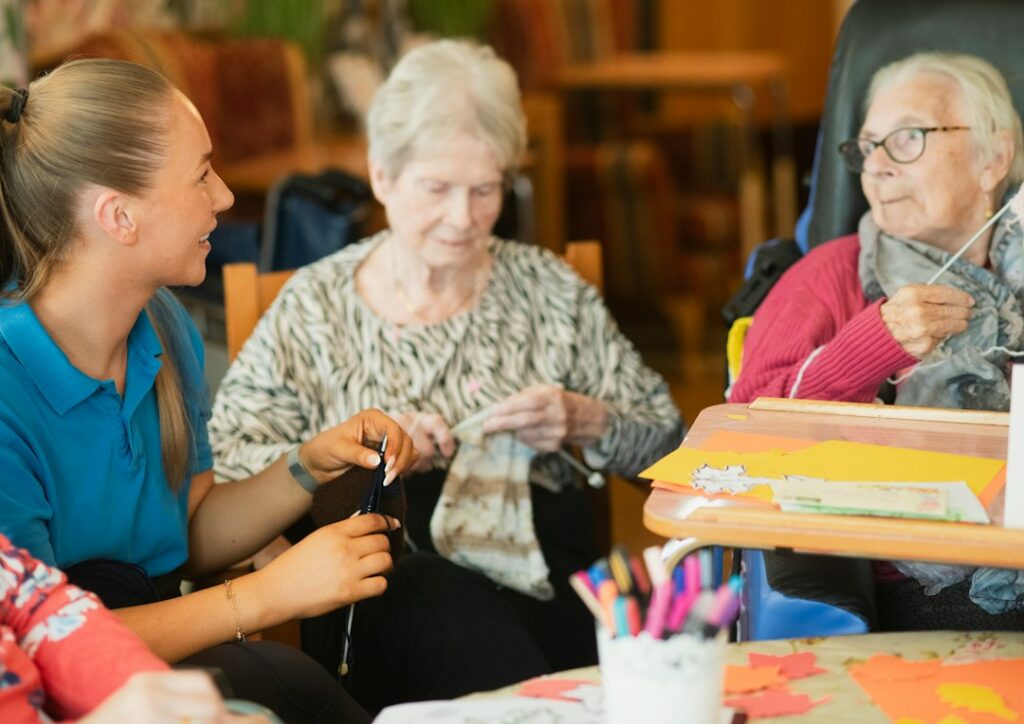
Creative activities are not just ways to pass the time in assisted living. Drawing, music, storytelling, gardening, crafts, cooking, and other forms of expression can support memory, mood, social connection, confidence, and a sense of purpose.
For older adults living in Brentwood, PA, creative opportunities can also provide meaningful structure during seasons when outdoor activities are limited by cold temperatures, rain, snow, or shorter daylight hours. The most effective programs are flexible, adapted to individual abilities, and shaped by each resident’s interests rather than by age-based assumptions.
Why does creativity matter in assisted living?
Creative activity supports emotional well-being and gives residents a way to express themselves, even when speech, memory, hearing, or mobility has changed. A person does not need formal artistic training to benefit.
A familiar song may bring back memories. Arranging flowers can provide a calming routine. Painting can offer a sense of control. Telling stories about family history can strengthen social relationships and preserve personal identity.
Creativity may also support:
- Improved mood and reduced boredom
- Opportunities for conversation and companionship
- Hand strength, coordination, and gentle movement
- Mental stimulation and decision-making
- Confidence through completed projects
- A stronger sense of independence
- Connection with family members across generations
The value comes from participation, not from producing something technically polished.
Which creative activities work well for older adults?
The best activity depends on the resident’s preferences, energy level, vision, hearing, dexterity, and cognitive abilities. A broad program should include both familiar and new choices.
Art and visual projects
Painting, colored pencils, collage, photography, and simple printmaking can be adapted for beginners. Large-handled brushes, easy-grip markers, larger paper, and non-toxic materials may help residents with arthritis or limited hand strength.
Projects do not need to be complicated. Examples include:
- Seasonal watercolor cards
- Collages made from magazines or fabric
- Painting wooden shapes
- Decorating picture frames
- Creating simple nature scenes
- Drawing objects connected to childhood memories
Some residents may prefer choosing colors or arranging materials rather than completing the entire project.
Music and rhythm
Music is especially useful for residents who have difficulty communicating through conversation. Singing, listening sessions, hand percussion, movement to familiar songs, and group rhythm activities can encourage participation at many ability levels.
A music program can include songs from different decades, cultural traditions, religious backgrounds, or personal histories. Residents should be invited to suggest selections rather than being expected to enjoy the same music as everyone else.
Music may also be helpful for family visits. Singing a familiar song together can create connection when conversation feels difficult.
Writing and storytelling
Writing does not have to mean composing long essays. Residents can write short memories, captions for photographs, poems, letters, recipes, or descriptions of meaningful places.
For residents who cannot write easily, a staff member, family member, or volunteer may record spoken stories with permission. Story prompts might include:
- A favorite holiday tradition
- A first job
- A memorable meal
- A childhood game
- A person who influenced the resident
- A home or neighborhood remembered fondly
- A skill learned from a parent or grandparent
These activities can support life-story projects while allowing residents to decide what they wish to share.
Gardening and nature-based creativity
Plants can bring sensory stimulation and purpose indoors, particularly during winter. Residents may enjoy planting herbs, arranging cut flowers, caring for indoor plants, or creating seasonal displays with leaves, branches, or pinecones.
Gardening activities should account for allergies, soil handling, watering safety, and access to handwashing. Raised containers or tabletop planters may be easier than floor-level pots.
In a community with many established homes and compact residential areas, indoor gardening can be a practical way to maintain contact with nature without requiring long travel or extensive outdoor space.
How can activities be adapted for residents with memory loss?
Residents with dementia or other forms of memory loss can still enjoy creativity. Activities should focus on sensory experience, familiarity, and choice rather than on remembering instructions or finishing a particular product.
Helpful adaptations include:
- Offering one or two steps at a time
- Using familiar objects, colors, songs, and materials
- Demonstrating instead of giving lengthy explanations
- Providing hand-over-hand guidance only with consent
- Allowing extra time
- Reducing background noise
- Avoiding correction when a project looks different from the example
- Celebrating participation rather than accuracy
A resident may not remember attending an activity later but can still experience comfort, interest, and connection during it. That immediate benefit is meaningful.
What if a resident says, “I am not creative”?

Many older adults associate creativity with artistic talent and may hesitate because they believe they cannot draw, sing, write, or make crafts. A better approach is to offer low-pressure choices that do not feel like a test.
Instead of asking someone to create a finished painting, invite them to choose colors. Instead of asking for a written story, ask a simple question about a photograph. Instead of expecting singing, offer listening, clapping, or gentle movement.
Creativity also includes practical and social activities. Folding fabric for a display, arranging objects, decorating a table, choosing music, sharing a recipe, or teaching a traditional skill can all be creative contributions.
How can families support creative expression?
Family members can help by learning what the resident enjoyed before moving into assisted living. Useful questions include:
- Did the person sew, cook, garden, repair objects, dance, collect items, or play music?
- Which holidays, foods, colors, or songs have personal meaning?
- Were there creative activities the person stopped because of vision, pain, transportation, or lack of space?
- Does the resident prefer individual projects or group activities?
- What types of help feel respectful rather than intrusive?
Families can bring photographs, fabric samples, recipe cards, familiar music, or safe craft materials when permitted. Visits can include a shared activity rather than only conversation.
It is also helpful to avoid taking over. The resident should retain as much choice as possible, even if the finished result is slower, simpler, or different from what another person imagined.
How should assisted living communities make creativity accessible?
Creative programming works best when it is treated as part of daily life rather than as an occasional special event. Activities should be offered at different times, because residents may have varying energy levels, medication schedules, and care routines.
A supportive environment should provide:
- Clear, uncluttered work areas
- Good lighting and comfortable seating
- Materials that are safe and easy to handle
- Options for residents with limited vision or hearing
- Quiet alternatives for people who dislike groups
- Protection for clothing and furniture
- Breaks for fatigue or discomfort
- Display areas that respect resident consent
- Opportunities to revisit unfinished projects
Seasonal planning is useful in the local climate. Indoor activities can become especially valuable during icy conditions, heavy rain, or periods when walking outdoors is uncomfortable. Warmer months may allow for patios, container gardening, outdoor sketching, or nature observation, provided shade, hydration, seating, and weather conditions are considered.
What should families look for in a creative activity program?
A strong program is not measured by how elaborate the crafts appear. More useful questions focus on inclusion and resident choice:
- Are residents invited to suggest activities?
- Can projects be adapted for different abilities?
- Are quiet and individual options available?
- Do staff value the process as much as the finished result?
- Are cultural traditions and personal histories respected?
- Can residents decline without embarrassment?
- Are completed works displayed only with permission?
- Is creativity available beyond scheduled group events?
A resident may prefer arranging objects, listening to music, telling stories, or helping prepare materials. Those forms of participation deserve the same respect as painting a picture or completing a craft.
Supporting creativity in assisted living means protecting opportunities for choice, expression, memory, and connection. The activity may be simple, but its meaning often comes from the resident’s history and the freedom to participate in a personally satisfying way.
